Human Design, Kabbalah, the I Ching, and the Chakra System
Different Languages, One Coherent Map of Consciousness
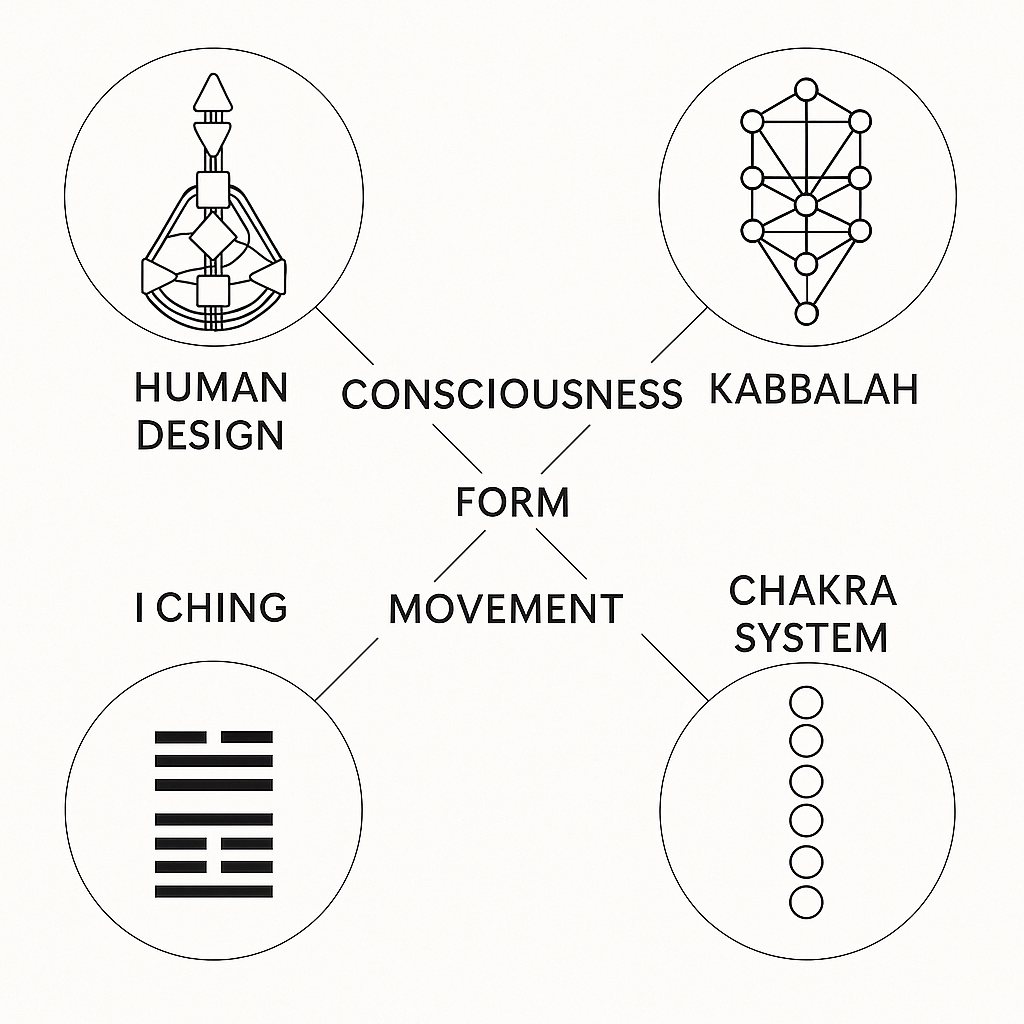
Human Design is often introduced as a modern and unconventional system, sometimes framed as entirely new or even alien when compared to established spiritual traditions. Yet when examined carefully, its structure reveals something far more familiar. Human Design is not an isolated invention but a contemporary synthesis rooted in ancient frameworks—particularly Kabbalah, the I Ching, and the Vedic chakra system—translated into a language of embodiment rather than belief.
What unites these systems is not symbolism or theology, but a shared inquiry: how consciousness moves into form, how it organizes human experience, and what causes distortion when that movement is interrupted.
Kabbalah and the Tree of Life: Consciousness as Flow
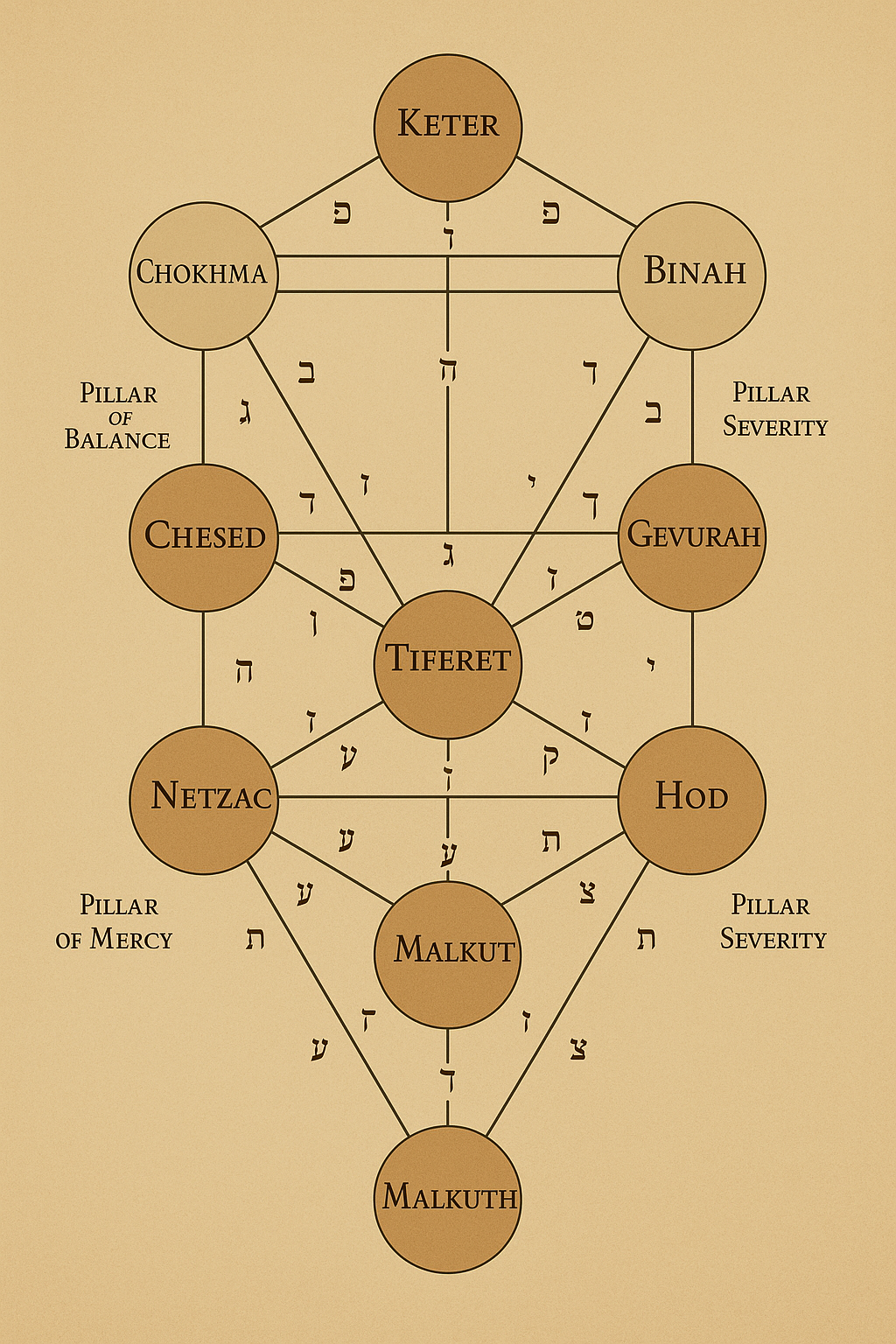
In classical Jewish mysticism, the Tree of Life is not meant to function as a religious hierarchy or moral ladder. Rather, it is a diagram of flow—a symbolic representation of how divine or universal consciousness descends into lived reality. The ten Sephiroth represent capacities of awareness such as will, understanding, compassion, discernment, communication, and embodiment. The twenty-two paths connecting them describe how awareness transitions between these states.
When this flow remains connected to source, it produces coherence and integration. When it becomes fragmented—often through fear, separation, or rigid identification—distortion emerges. In Kabbalistic language, this distortion is described as the Qliphoth, or “shells.” Importantly, the Qliphoth are not understood as independent evil forces in traditional Kabbalah. They are the same human capacities experienced without connection to source—structure without life, order without conscience.
The central concern of Kabbalah is not the eradication of shadow, but tikkun, or repair—the restoration of flow through awareness.
Primary sources: The Zohar; Isaac Luria’s teachings on Shevirat ha-Kelim; Gershom Scholem, Major Trends in Jewish Mysticism.Human Design: The Tree of Life Embodied
Human Design takes this same structural map and translates it into the human body. The BodyGraph can be understood as the Tree of Life rotated and biologically interpreted. The Sephiroth become Centers, the paths become Channels, and abstract spiritual movement becomes consistent energetic and neurological patterns within an individual.
Where Kabbalah describes universal architecture, Human Design describes individual mechanics. Instead of prescribing belief, it emphasizes experimentation: observing how decisions, emotions, perception, and expression function when guided by inner authority rather than mental conditioning.
The Human Design concepts of Strategy and Authority parallel Kabbalistic repair. Both systems identify misalignment as the result of outsourced authority—allowing fear, conditioning, or hierarchy to override direct discernment. Alignment, in both traditions, restores coherence without force.
Primary sources: Ra Uru Hu, The Human Design System; Jovian Archive materials.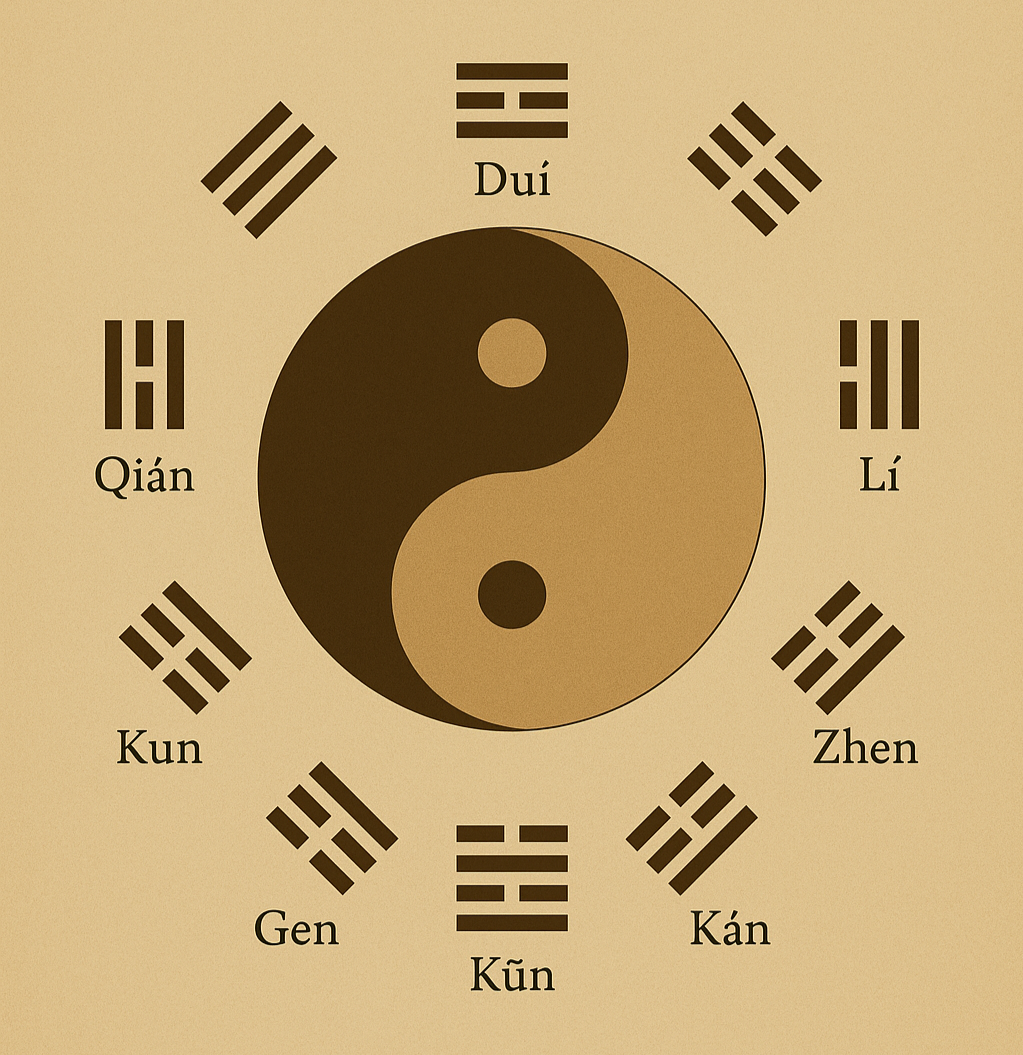
The I Ching: Change, Timing, and Response
While Kabbalah provides structure and Human Design provides embodiment, the I Ching introduces the dimension of change. Originating in ancient China, the I Ching maps sixty-four archetypal states of transformation, each describing a moment that calls for a particular response rather than a fixed moral judgment.
In Human Design, the sixty-four Gates correspond directly to the I Ching’s hexagrams. Each gate represents a specific mode of expression or perception, while Channels form when complementary gates connect, creating consistent internal dynamics. This integration highlights a core principle shared by all three systems: alignment is contextual. It depends not on being “right,” but on responding appropriately to timing, environment, and inner authority.
Primary sources: Richard Wilhelm, The I Ching or Book of Changes; Alfred Huang translations.The Chakra System: Vertical Integration of Consciousness
The Vedic chakra system offers a bodily framework that mirrors both the Tree of Life and the Human Design BodyGraph. Traditionally, chakras are understood not as mystical energy wheels to be opened, but as levels of integration through which consciousness expresses itself—from survival and emotion to identity, expression, perception, and unity.
Structurally, all three systems are vertical maps. They describe consciousness moving from source into matter and the challenges that arise when energy becomes stuck, overidentified, or fragmented. Where the chakra system emphasizes cultivation and balance, Kabbalah emphasizes flow, and Human Design emphasizes correct usage. Each points to the same underlying issue: integration rather than transcendence.
Primary sources: The Upanishads; Sir John Woodroffe (Arthur Avalon), The Serpent Power.Shadow Across Traditions: Misalignment
In Kabbalah, distortion appears as Qliphoth. In Human Design, it appears as Not-Self conditioning. In the I Ching, it appears as mistimed action. In the chakra system, it appears as blocked or overemphasized centers.
The common thread is not moral failure, but loss of inner authority. When fear replaces discernment, structure replaces conscience, and hierarchy replaces direct knowing, distortion naturally follows. Repair occurs not through opposition, but through reconnection.
Christ Consciousness: Inner Authority Made Explicit
When approached outside institutional theology, Christ consciousness fits seamlessly within this framework. The teachings attributed to Jesus consistently emphasize direct relationship with truth rather than obedience to external authority. Statements such as “The kingdom of God is within you” point to the same principle articulated in Kabbalah, the chakra system, and Human Design: discernment is internal.
Christ consciousness does not reject structure outright, but it refuses to allow structure to override conscience. In this sense, it represents the lived embodiment of alignment—compassion guided by discernment, and action rooted in awareness rather than fear.
Why This Synthesis Matters Now
Modern systems—social, religious, and economic—tend to reward urgency, obedience, and external validation. These ancient frameworks quietly challenge that orientation. They suggest that autonomy is not rebellion but alignment. When inner authority is restored, fear-based systems lose their grip naturally. Repair happens not through confrontation, but through presence.
Human Design, in this context, is not a belief system or identity. It is a modern interface for an ancient truth: consciousness wants to flow, the body knows how, and discernment has always been the point.
Conclusion
Kabbalah shows the architecture of consciousness. The I Ching reveals its movement through time. The chakra system illustrates its embodiment within the human form. Human Design brings these ancient insights into lived experience, offering a practical way to observe how consciousness moves through your body, decisions, and daily life.
Across cultures and centuries, these systems have pointed toward the same truth: alignment is not achieved through belief or obedience, but through discernment. Understanding the map is one thing; learning how it expresses itself uniquely through you is another. Human Design becomes most meaningful when it is explored personally—when abstract principles turn into embodied awareness, and theory gives way to experience.
Different cultures. Different symbols. One coherent map.
If you feel drawn to explore how this map functions through your own design—your energy, your decision-making, and your innate rhythm—I offer Human Design consultations as a grounded, supportive space for that inquiry. These sessions are not about labels or prescriptions, but about helping you reconnect with your own inner authority and live in alignment with it.
Interested in learning about your unique human design? Learn how to tap into your inner discernment system today with a consultation.
Selected References & Further Reading
Scholem, G. Major Trends in Jewish Mysticism
The Zohar (Pritzker Edition)
Ra Uru Hu, The Human Design System
Wilhelm, R. The I Ching or Book of Changes
Woodroffe, J. The Serpent Power
Jung, C.G. Psychology and Alchemy (for shadow parallels)
