The Quiet Spiritual War: Hierarchy, Corruption, and the Forces That Reward Domination

There is a war unfolding beneath the surface of modern life, though it rarely announces itself as such. It does not look like battle. It looks like policy. It sounds like professionalism. It hides behind phrases like “that’s just how the world works.”
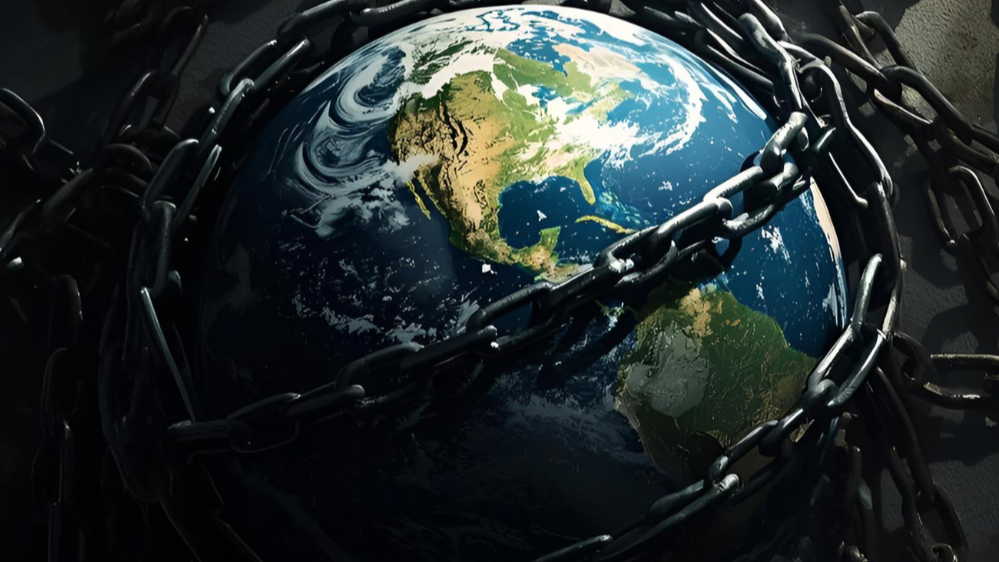
Whether we understand this war as mass societal corruption, systemic moral decay, or even opposition from forces beyond the purely human, our lived experience is strikingly similar: power consolidates upward, empathy is penalized, truth is costly, and hierarchy becomes the organizing principle of value.
What is being contested is not territory but conscience.
Hierarchy as the Root Distortion
At the heart of this conflict lies a deeply embedded assumption: that human beings are not equal in worth.
Hierarchy, when treated as a value system rather than a logistical tool, quietly teaches that some lives, voices, and needs matter more than others. Once this belief takes hold, distortion becomes inevitable. Decisions cease to flow from care and instead flow from position. Truth becomes conditional. Harm becomes abstract.
Whether this inversion arises purely from human systems—or is exacerbated by influences we do not yet fully understand—it functions the same way: it separates power from responsibility and authority from empathy.
Humans, at their core, are equal in worth. Not identical in role or ability, but equal in dignity, value, and moral weight. Any system that forgets this will eventually reward domination over integrity.
How Corruption Learns It Will Be Rewarded
Corruption rarely begins with malice. It begins with pressure:
-A leader suppresses an inconvenient truth to maintain order.
-A manager prioritizes outcomes over people to meet expectations.
-A religious authority invokes fear to preserve unity.
The compromise works. Stability is preserved. Results improve. Obedience increases.
The system learns.
Once a behavior is rewarded—through status, money, protection, or belonging—it is then reinforced. Over time, what began as an exception becomes best practice. What once felt wrong begins to feel necessary. Eventually, it feels inevitable.
Whether one interprets this as emergent system behavior or something more adversarial in nature, the result is the same: corruption becomes adaptive.
Leadership and the Cost of Seeing Clearly
In many leadership structures, advancement depends not on wisdom or ethical clarity, but on alignment with existing power.
Those who rise fastest are often those who:
avoid questioning authority
absorb institutional language
protect hierarchy
suppress personal misgivings
Those who see clearly—who notice contradictions between stated values and lived reality—become liabilities. Not because they are hostile, but because they destabilize illusion. Hierarchy does not fear rebellion as much as it fears discernment. Rebels can be contained. Discernment exposes the frame itself.
So truth is softened, delayed, or ignored. And those who insist on integrity are quietly sidelined.
Religion, Fear, and the Management of Conscience
When religion becomes hierarchical rather than revelatory, fear replaces faith as the primary organizing force.
Fear of punishment.
Fear of exile.
Fear of being wrong, impure, or unworthy.
Empathy becomes dangerous because it complicates rigid moral structures. Discernment becomes suspect because it returns authority to the individual conscience. Obedience, rather than wisdom, becomes the measure of righteousness.
Whether this is understood as institutional drift, spiritual corruption, or opposition to human awakening, the effect is consistent: control is maintained by severing people from their own moral knowing. Those who refuse this severance are rarely engaged honestly… they are excluded.
Business, Extraction, and the Invisible Ceiling
In business, the same dynamics appear under neutral language. Growth, efficiency, and profitability are treated as objective realities rather than value-laden choices. Human cost is abstracted. Over time, success favors those who can detach from consequence without inner conflict.
Empathy slows extraction.
Integrity complicates optimization.
Truth threatens hierarchy.
An unspoken ceiling emerges: help people, but not too much. Pay fairly, but not equally. Support growth, but not sovereignty. Those who question this are told they are unrealistic or unsuited for leadership.
This is not accidental. It is structural.
Exile as a Mechanism of Control
Across leadership, religion, and business, one pattern repeats: individuals who prioritize truth, value, and human equality are eventually pushed out. Not violently. Not dramatically. But efficiently. They are marginalized, ignored, or reframed as unstable. Their influence diminishes. Their presence becomes inconvenient.
Whether one views this as social conditioning, institutional self-preservation, or the influence of something more adversarial, the pattern remains: systems protect themselves by expelling clarity.
Why This Feels Like a Spiritual War
Because what is being selected for is not intelligence, but emotional detachment. Not leadership, but domination. Not faith, but compliance. People who remain sensitive, perceptive, and internally aligned feel the wrongness first. They sense that something fundamental is inverted—not because they are fragile, but because they are still connected to the truth hierarchy obscures.
That truth is simple and dangerous: no human is more valuable than another.
Whether the forces opposing this truth are entirely human, partially systemic, or influenced by realities we do not yet fully understand remains an open question. What matters is the effect—and the effect is clear.
Naming the War (Without Pretending We Know Everything)
We don’t know everything.
We do not know the full nature of reality, consciousness, or the forces that shape collective behavior. Anyone claiming certainty—one way or another—is overreaching.
But we do know this:
Corruption thrives when hierarchy replaces equality, when fear replaces conscience, and when domination is rewarded over care.
This spiritual war is not won by declaring enemies or denying mystery. It is won by refusing false hierarchies, choosing coherence over compliance, and building systems—large or small—that remember what distortion forgets.
That humans are equal in worth. That power exists to serve life. And that integrity, though costly in distorted systems, remains one of the most quietly disruptive forces in the world.
The Threshold We Are Approaching
Many contemporary spiritual systems—including Human Design—suggest that the coming years mark a profound energetic transition, often described as a shift away from hierarchical, tribal survival structures and toward individual integrity, embodied awareness, and self-sourced authority. Whether one views this through a mystical, psychological, or sociological lens, the implication is the same: the old incentives that reward domination, fear, and compliance are losing coherence. The emerging energy does not ask us to overthrow systems through force but to withdraw our consent from structures that require self-betrayal to function. It asks leaders to become stewards rather than rulers, organizations to value humanity over extraction, and individuals to stop outsourcing truth to authority. In this sense, the coming shift is not about ascension or escape—it is about accountability. It will quietly but relentlessly expose where hierarchy has replaced equality, where fear has replaced conscience, and where power has lost its relationship to care. Those who can meet this moment will not be the most obedient or the most ruthless, but those willing to stand in integrity without guarantees, to lead without domination, and to remember—perhaps against all conditioning—that no external system can replace an internally aligned human being.
