The Mystery of “Fragrance”: How a Single Word Came to Mean So Much—and So Little
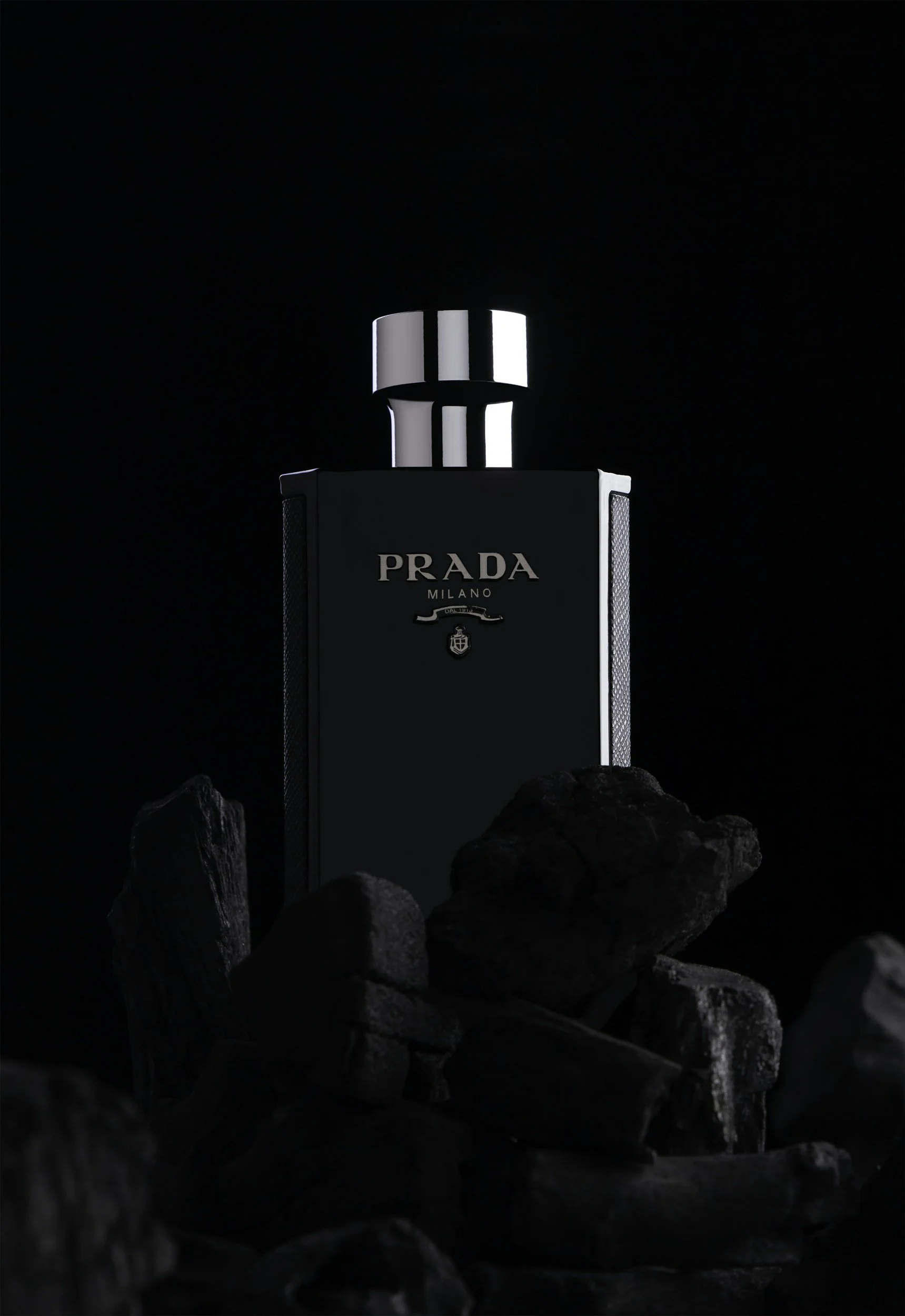
Walk down the skincare aisle of any American store and you’ll encounter a familiar word repeated across ingredient labels: fragrance. It’s small, unassuming, and easy to overlook. Yet behind this single word can sit dozens—or even hundreds—of undisclosed substances. To understand how this became standard practice, we have to step back nearly a century, to the foundations of cosmetic regulation in the United States.
A Law Written for Another Era
Modern U.S. cosmetic oversight is largely rooted in the Federal Food, Drug, and Cosmetic Act of 1938, a law written at a time when beauty products were far simpler than they are today. The primary goal of this legislation was to prevent obvious harm—contamination, adulteration, and clearly dangerous substances—not to ensure ingredient transparency or address cumulative exposure over time.
From the beginning, cosmetic formulas were treated as proprietary intellectual property. Protecting trade secrets was seen as essential to innovation and competition. Fragrance blends, in particular, were granted special protection. Rather than requiring brands to disclose each component of a scent, regulators allowed fragrance mixtures to be listed collectively as “fragrance” or “parfum.”
The U.S. Food and Drug Administration explains that ingredient labeling requirements do not override trade secret protections, and that fragrance formulas are among the components most commonly considered proprietary. This legal framework remains largely unchanged today.

From Botanical Perfume to Chemical Architecture
When these rules were first established, fragrance usually referred to relatively simple blends derived from plants—essential oils, resins, and absolutes. But throughout the twentieth century, advances in synthetic chemistry dramatically expanded the fragrance palette.
Modern fragrances may include aroma chemicals, solvents, fixatives, preservatives, and stabilizers engineered to improve longevity, consistency, and scent projection. A single fragrance formula can now contain dozens or even hundreds of individual substances, most of which never appear by name on an ingredient label.
Environmental health advocate and author Stacy Malkan, co-founder of the Campaign for Safe Cosmetics, has described fragrance disclosure as:
“A loophole in the labeling laws.”
The word fragrance no longer describes a single ingredient—it functions as a legal container for an entire unseen formulation.
Oversight, Self-Regulation, and What the FDA Does (and Doesn’t) Do
In the United States, cosmetic products and ingredients—with the exception of color additives—do not require FDA pre-market approval. This includes fragrance ingredients. Instead, manufacturers are legally responsible for ensuring their products are safe before they reach consumers.
Many companies follow safety guidelines developed by the International Fragrance Association (IFRA), an industry organization that publishes standards based on toxicological review. While these standards are widely used, they are not laws, and compliance is largely voluntary.
The FDA has acknowledged this regulatory structure, noting that it typically intervenes only after safety issues arise. This approach differs significantly from how pharmaceuticals or food additives are regulated and places much of the burden of safety assessment on manufacturers themselves.

What “Fragrance” Can Legally Conceal
Under current U.S. regulations, the term fragrance may include substances that some individuals are sensitive to or wish to avoid, including known allergens and sensitizers. Because these components are not required to be individually disclosed, consumers often have no way of knowing what they are reacting to—or what they are repeatedly exposing their skin to.
In dermatology, fragrance ingredients are well documented as a leading cause of cosmetic-related allergic reactions. Clinical sources note that fragrance allergy is among the most common causes of allergic contact dermatitis, second only to nickel sensitivity in many populations.
Skin is not merely a surface; it is a dynamic organ connected to the immune, endocrine, and nervous systems. Transparency matters when products are used daily, absorbed repeatedly, and applied to compromised or sensitive skin.
A Different Path in Europe
Other regions have taken a different regulatory approach. In the European Union, cosmetic law requires the disclosure of specific fragrance allergens when they are present above defined thresholds. While the term parfum or aroma may still be used for fragrance blends, certain allergenic components must be named individually.
This reflects a broader philosophical difference: consumer right-to-know is prioritized alongside product safety. Recent updates to EU regulations have expanded the list of fragrance allergens requiring disclosure, signaling a growing recognition that transparency and protection must evolve with scientific understanding.
Beyond What’s Allowed: A More Intentional Approach to Scent
The modern movement toward clean and transparent formulation is often framed as a trend, but it is better understood as a response to outdated systems. For formulators, practitioners, and consumers seeking alignment between ingredients and intention, mystery is no longer acceptable.
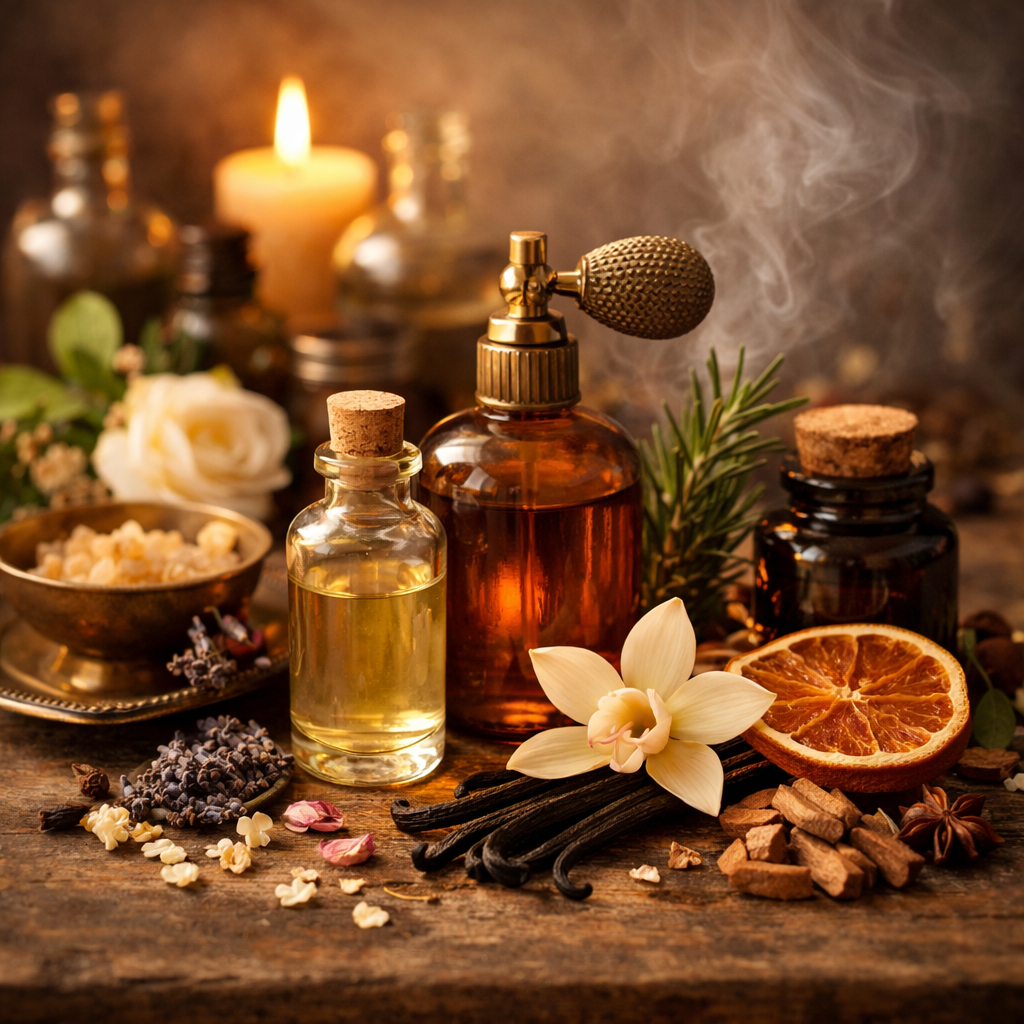
At The Mindful Gem, scent is approached as an experience—not a disguise. We do not use undisclosed fragrance blends. Instead, aroma is created through clearly identified botanicals, traditional oil infusions, and carefully selected essential oils used at intentionally low, skin-safe concentrations.
Many of our products derive their scent from slow botanical infusions, where whole plants gently impart their aromatic and therapeutic qualities into a carrier oil over time. This traditional method creates subtle, integrated aromas that feel supportive rather than overwhelming.
When essential oils are used, they are chosen for their safety profiles and used sparingly, in accordance with professional best practices. Our goal is not intensity or artificial longevity, but balance—allowing scent to enhance ritual, presence, and sensory connection without compromising skin health.
Choosing Transparency as an Ethic
The word fragrance may still be permitted by American law. But permission does not equal alignment. As consumers become more informed and formulators more intentional, transparency becomes not just a preference, but an ethic.
Skincare, at its best, has always been relational—a conversation between plants, people, and care. When ingredients are clearly named, thoughtfully chosen, and respectfully used, that relationship deepens. And in that clarity, trust has room to grow.
Follow along on social media for thoughtful education, behind-the-scenes formulation, and a closer look at the plants, practices, and philosophy behind The Mindful Gem. Our Earth Day launch arrives this April—stay connected as we share what’s coming.
