From Back Injury to Botanical Medicine: The Origin Story of Our Most Potent Balm
A botanical remedy born from love, ancestral medicine, and modern research
There is a moment every healer, herbalist, or intuitive maker remembers—a moment when a remedy doesn’t come from strategy or product development, but from love.
For me, that moment happened after my husband suffered an extruded disc injury. Even after the acute phase passed, his body carried the memory. Nerve zings down the leg. A stubborn patch of tension across the back. Muscles stepping into guard mode at the slightest provocation. Pain, I learned, isn’t always dramatic—it’s often cyclical, returning like an old visitor who doesn't know when to leave.
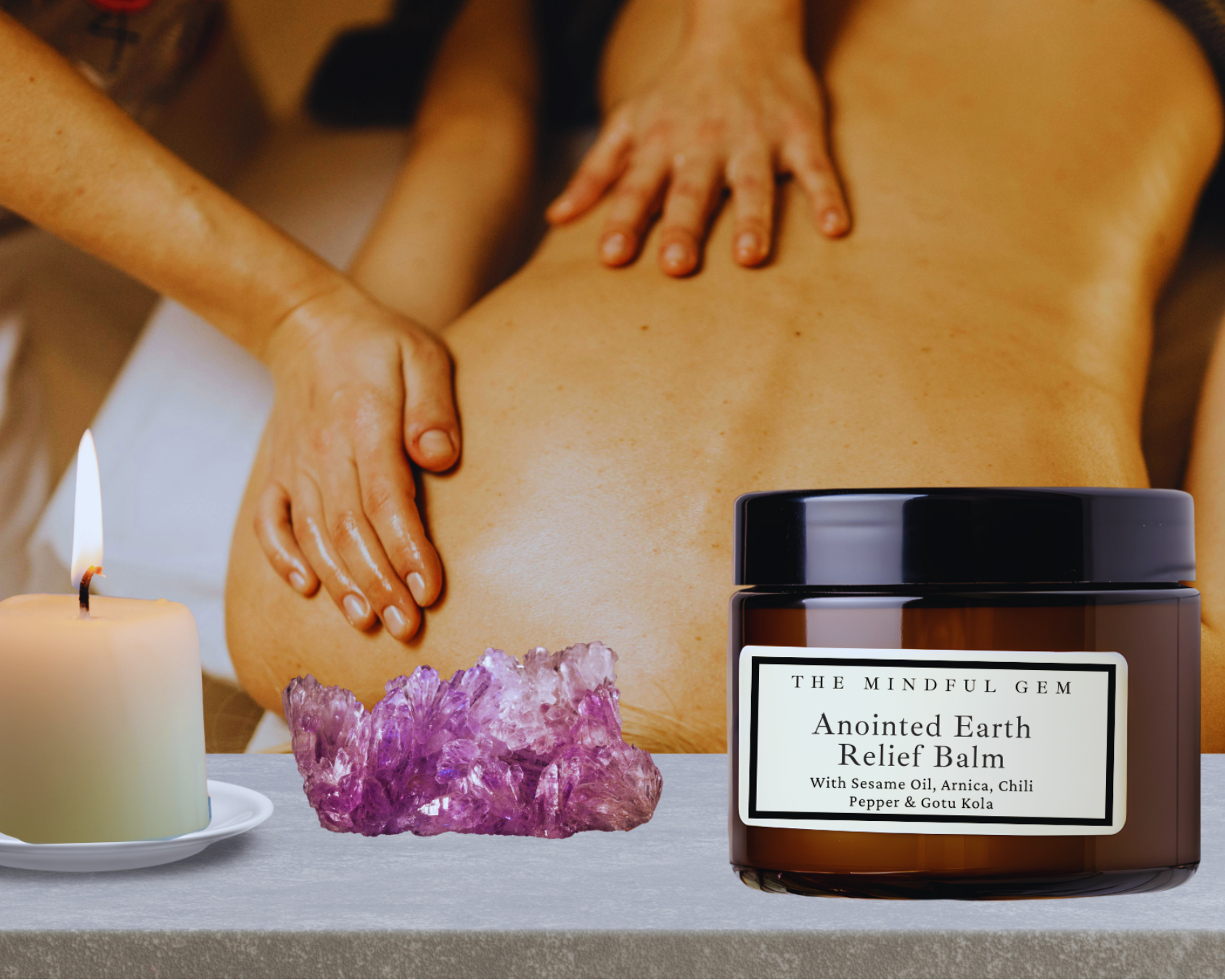
We tried the usual things. Store-bought creams. CBD balms. Heat packs. But nothing truly addressed the root of the discomfort: stagnation, inflammation, nervous-system irritation, and the connective tissue that had worked overtime to compensate for the injury.
So I did what herbalists have done for thousands of years - I turned to the plants.
What emerged from that search, after lots of refining, infusing, balancing, and testing, became the balm that now sits in your hands. A balm that doesn’t numb or mask sensations but works with the body’s natural healing rhythms through deep warmth, circulatory support, anti-inflammatory herbs, and the intelligence of ancient botanicals.
This is its story.
THE WISDOM OF THE PLANTS: A DEEPER HERBAL JOURNEY
What makes this balm special isn't just its warmth. It's the lineage behind each herb—plants used across continents to soothe the body, restore movement, and bring comfort to places holding old stories of pain. Below is their interconnected tale—their history, their energetics, and what modern science now confirms about their gifts.
GOTU KOLA—The Herb of Longevity and Repair
(Centella asiatica)
Gotu kola is a small creeping herb with an outsized reputation. In Ayurveda, it was revered for more than 3,000 years as a rasayana—an herb of renewal and longevity. Yogis used it to steady the mind; warriors used it to restore the body.
What’s fascinating is that modern research has caught up. Studies show that gotu kola:
Supports collagen synthesis
Improves microcirculation
Strengthens connective tissue
Enhances healing of strained or inflamed areas
One study from Phytomedicine found that Centella extracts improved venous circulation and tissue integrity—exactly what’s needed when muscles and fascia lock up around old injuries.
Gotu kola is the quiet genius of this formula: the herb that reminds injured tissue how to reorganize, rebuild, and soften again.
HORSETAIL—The Silica-Rich Strengthener
(Equisetum arvense)
Horsetail is one of the oldest plants on Earth—older than the dinosaurs. Ancient physicians from Rome to medieval Europe used it for bone strengthening, tendon healing, and urinary health.
But horsetail’s magic lies in its bioavailable silica, essential for:
Collagen formation
Connective tissue repair
Maintaining structural integrity in stressed muscles and joints
A review in the Journal of Herbal Medicine confirms its anti-inflammatory and elastic-fiber-supporting properties.
In a warming balm, horsetail doesn't just soothe discomfort—it helps re-educate tissues that have been “holding on” for too long.
NETTLE — The Mineral Queen & Anti-Inflammatory Powerhouse
(Urtica dioica)
Nettle is a plant with a backbone—literally. High in minerals like calcium, magnesium, and iron, it has been used traditionally in Europe for joint pain, stiffness, and chronic inflammation.
Long before supplements existed, people practiced urtication—gently brushing inflamed joints with fresh nettle to stimulate blood flow. Thankfully, we infuse it instead.
Modern studies in Planta Medica and Journal of Ethnopharmacology show nettle’s:
anti-inflammatory
analgesic
antioxidant
properties—making it ideal for tissues recovering from old trauma or nerve irritation. Nettle is grounding, fortifying, and deeply restorative.
ARNICA—Nature’s Muscle & Trauma Remedy
(Arnica montana)
Arnica is a legend in herbal medicine. For centuries, it has been applied to bruises, sprains, and sore muscles.
But perhaps more impressive is that modern science consistently backs what traditional healers knew:
Arnica gels have shown comparable effectiveness to ibuprofen gels for pain from osteoarthritis (Rheumatology International).
It has anti-inflammatory, circulatory, and pain-modulating effects.
In this balm, arnica helps soften the body’s protective “clench”—the muscle bracing that happens around an old disc injury.
CHILI CO₂ & CAPSICUM—Deep, Therapeutic Warmth
(Capsicum annuum CO₂ & Capsicum frutescens extract)
This is not the “tingle” found in generic balms. Chili CO₂ is the gold standard of warming extracts—cleaner, deeper, and more consistent than standard capsicum oleoresin.
For centuries, capsicum has been used:
by Mesoamerican cultures for joint pain
in Traditional Chinese Medicine for qi stagnation
by modern herbalists to boost circulation and soothe nerve discomfort
And research? It’s extensive.
Capsaicin (the active compound):
reduces pain signal transmission (modulates substance P)
increases local circulation
eases nerve-related pain
supports long-term reduction of chronic discomfort
Multiple studies in Pain, The New England Journal of Medicine, and other reputable journals confirm its effectiveness.
This warming duo is the heart of your balm—penetrating, encouraging movement, and soothing nerve tension from the inside outward.
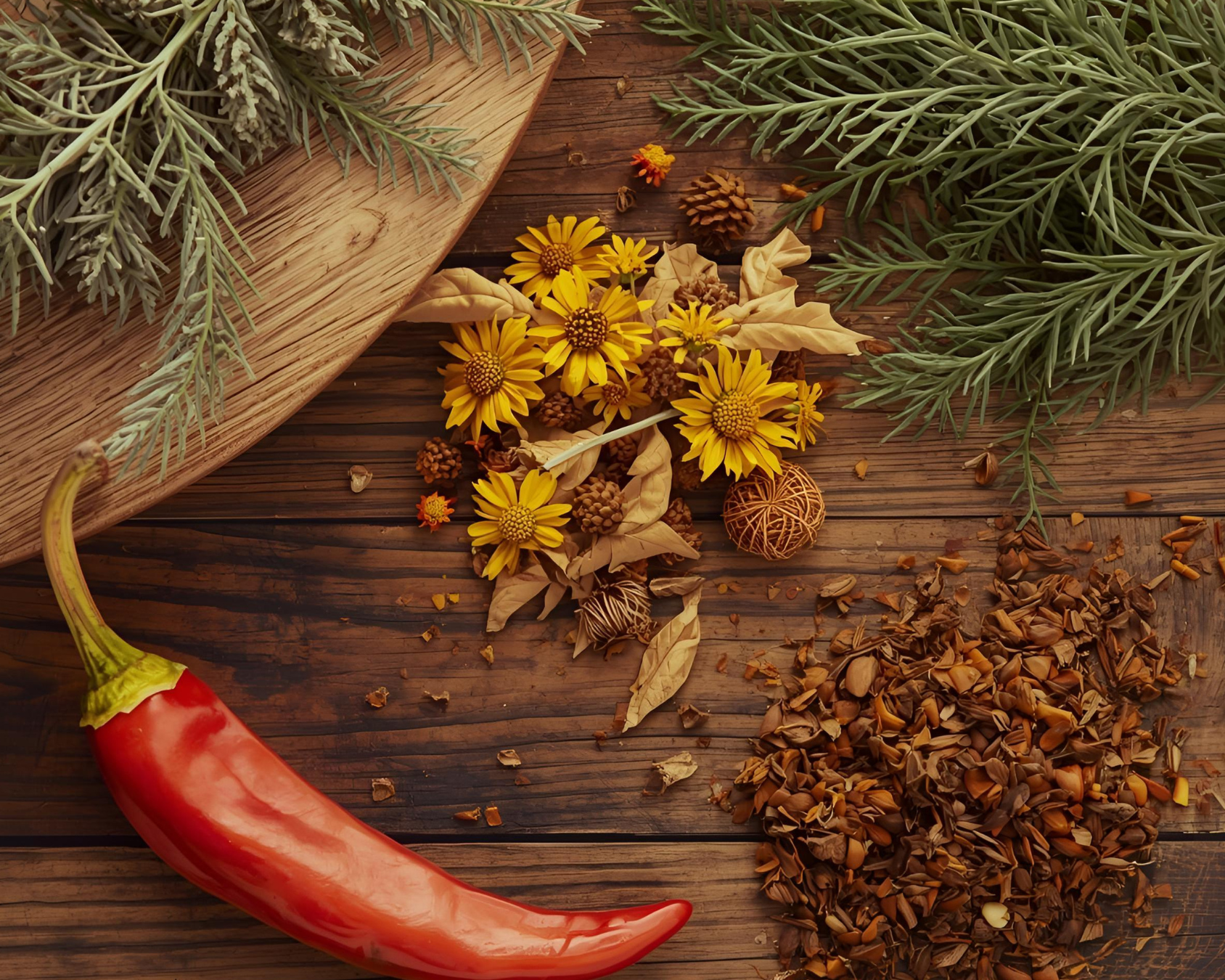
THE AROMATIC RESINS & OILS: A FOREST OF HEALERS
Your balm’s scent may not be “pretty”—and that’s because it’s not perfume.
It smells like something real, something forested and ancient, because it is.
Pine & Rosemary
Stimulate circulation and open pathways of movement.
Lavender
Reduces pain perception and calms the nervous system.
Sage
Warms deeply and clears stagnation.
Frankincense & Myrrh
Used together for over 3,500 years, these resins reduce inflammation, soothe trauma, and bring ritual healing.
Hyssop
Circulation-moving, muscle-softening, energetically clearing.
A traditional herb used to ease tension and support deeper breathing. Hyssop encourages blood flow, helps unwind protective muscle guarding, and adds a gentle nervous-system–soothing quality to the balm.
These essential oils are not “fragrance notes.” They’re the finishing intelligence of the formula.
WHAT MAKES THIS BALM DIFFERENT FROM MAINSTREAM OPTIONS?
Most people assume all pain balms are the same… until they try one that behaves like medicine instead of menthol candy.
Here’s the truth:
1. ICY HOT
Uses menthol and synthetic compounds that numb the skin.
Fast-acting but superficial.
No long-term benefit; often dries out skin.
Our balm:
✔ Warming through circulation, not surface-numbing
✔ Supports tissue repair
✔ Nourishes, moisturizes, and improves movement over time
2. TIGER BALM
A classic, but relies on camphor + menthol
Strong smell, very surface-level
No herb infusions, no tissue support
Our balm:
✔ Contains true herbal extracts traditionally used for inflammation
✔ Penetrates deeper due to Chili CO₂
✔ Skin-nourishing + reconstructive
✔ Smells like an ancient apothecary, not a locker room
3. CBD BALMS
Often overpriced with mild results
CBD alone does not increase circulation
Many contain fillers or low-quality essential oils
Our balm:
✔ Does what CBD can’t: boosts circulation & softens nerve guarding
✔ Contains a synergy of researched herbs, not one trendy molecule
✔ Works immediately from the warmth + long-term from the herbs
WHY PEOPLE UNDERESTIMATE it
Because it doesn’t smell like peppermint gum. Because people aren’t used to real herbs. Because most modern balms are designed for scent appeal—not effectiveness.
But those who try it discover something remarkable: the pain doesn’t just disappear.
The body changes—softens, warms, opens, and remembers its natural state.
A BALM WITH ANCESTRY, SCIENCE, AND HEART
This balm was not created as a commercial product. It was created because someone I love was hurting. And when you make medicine for someone you love, you use the best of what nature offers.
Every herb inside this jar has a lineage. Every oil has a purpose. Every batch carries warmth, intelligence, and intention.
If you give this balm time—
If you let the heat and herbs work with your body—
You may find that relief doesn’t have to be harsh, mentholated, or synthetic.
Sometimes, relief is warm, herbal, and smells like the earth itself. And sometimes…
It works better than anyone expects.
Stay tuned for our Earth Day launch this April! Learn about the other herbs & botanicals we use at The Mindful Gem in our Apothecary Index.
REFERENCES & FURTHER READINGGotu Kola / CentellaBrinkhaus, B. et al. Phytomedicine (2000). “Chemical, pharmacological and clinical profile of Centella asiatica.”Widgerow, A. et al. Advances in Dermatology and Allergology (2012). “The use of Centella asiatica in skin healing.”
HorsetailSandhu, N. et al. Journal of Herbal Medicine (2010). “Equisetum arvense: Silica biology and tissue repair.”
NettleChrubasik, J.E. et al. Phytomedicine (2007). “Nettle extract in the treatment of pain.”Gulcin, I. et al. Planta Medica (2004). “Antioxidant and anti-inflammatory properties of Urtica dioica.”
ArnicaWidrig, R. et al. Rheumatology International (2007). “Arnica gel vs ibuprofen gel in hand osteoarthritis.”
Capsaicin / Chili CO₂Anand, P. et al. Pain (2011). “Capsaicin’s role in pain modulation.”Backonja, M. et al. New England Journal of Medicine (2008). “Topical capsaicin for neuropathic pain.”
Frankincense & MyrrhSu, S. et al. Journal of Ethnopharmacology (2012). “Synergistic anti-inflammatory effects of frankincense and myrrh.”
